🧠✨The Stories We Mistake For Truth
I’m reading a book right now called Dungeon Crawler Carl by Matt Dinniman. It’s a wild book about a random guy who is forced to play an intergalactic game show after an alien invasion by fighting trolls, rats, and llamas — all while trying to survive alongside his ex-girlfriend’s cat that has superpowers and is known to all as Princess Donut. 😂
And do you know what the best part of the book is for me? (Besides how hilarious the author is and the overall entertainment factor — because I dig that genre…)
It’s the fact that my brain spends absolutely NO time associating the content with reality in any way, shape, or form. I simply read it and enjoy it. I don’t attach a story to it, I don’t compare it to real life, I don’t apply any situation to my own experiences, so it becomes pure detached enjoyment for me.
I wish I could say the same for so many other parts of life.
Because it’s what we do… or more accurately, it’s what our brains do. We experience a situation (or sometimes just hear about one and never even experience it firsthand), and our brains attach an entirely different layer of meaning and “truth” to it. Before we know it, we are completely committed to a reality that we actually just fabricated.
And what’s worse? More often than not, we don’t create positive stories. 🙄
The Spiral We Know All Too Well 🌀
You know what I’m talking about here, right?
You have dinner with friends, and during dinner, you genuinely enjoy the conversation and feel happy and comfortable being together. But afterwards, when you’re alone with your thoughts, you start replaying the night.
Suddenly, two of your friends seemed just a little “off.”
Maybe they were talking about you before everyone got together? Yup, that’s probably it. They don’t actually think you deserve the promotion at work. In fact, now that you think about it, they were probably acting fake when they congratulated you. They’re jealous. Honestly, they’ve never really supported you. Maybe they aren’t even your real friends, and maybe it’s time to distance yourself because you simply can’t have that type of toxicity in your life right now…
HOLY CRAP, what the actual heck? — Can you relate to that? 😂
But guess what… none of it is actually true. It’s all made up, but at this point in your head, it feels 100% real and accurate.
Or how about this one…
You make one mistake at work, and suddenly your brain isn’t processing:
“Whoops, I made a mistake. I should work on fixing that.”
It’s processing:
“I’m incompetent, I’m probably getting fired, and honestly I think I’ve noticed that my boss has been giving me a little cold shoulder lately…”
Or this one…
You have a difficult conversation with your partner and suddenly your brain isn’t processing:
“We had conflict.”
It’s processing:
“This relationship is falling apart. We’re so disconnected, and in fact I think we have been for a long time.”
Or one of my personal favorites… one person criticizes you, and suddenly your brain starts rewriting your entire self-worth story around that single opinion while simultaneously scanning your memory database for evidence to support it. 🙃
So what is even happening here? How do we get here? And more importantly… how do we stop it?
Your Brain Wants Certainty, Not Accuracy ⚠️
Here’s where it gets interesting: our brains are actually not trying to make us accurate.
Can you believe that?
Because once the brain creates a story, it immediately starts treating it like a working theory instead of a question. From there, it scans for anything and everything that supports the theory. No fact-checking required.
The brain moves on to what it believes its real job is:
- invent certainty
- predict danger
- fill in the blanks
- assume patterns
- protect us
As soon as there’s a smidge of uncertainty or vulnerability, the brain says:
“Don’t worry, I’ll create a story so we can regain control here.”
Even if the story hurts us.
And the problem is, our brains do not like “maybe.” They don’t like “I don’t know.” So they draw conclusions to create certainty where there wasn’t any. They assume intent, create motive, rewrite memories (yup, you read that right), and assign meaning.
Then comes the second part of the spiral: confusing feelings with facts.
Defensiveness kicks in. Confirmation bias starts. Selective evidence gathering begins. The brain starts building a case file for the story it already decided was true.
And the craziest part?
Even while the story is fictional… the suffering becomes real.
Curiosity Is the Interruption 🔍
So how do we stop this from happening?
Honestly, I’m not sure we can completely stop it, considering this is simply part of how the human brain is wired. But I do think we can interrupt the pattern and slowly build new neural pathways so we respond differently over time.
And no… it does not start with forced optimism. 😂 Not by standing in front of a mirror yelling positive affirmations at the top of your lungs, while balancing on one foot, three times a day.
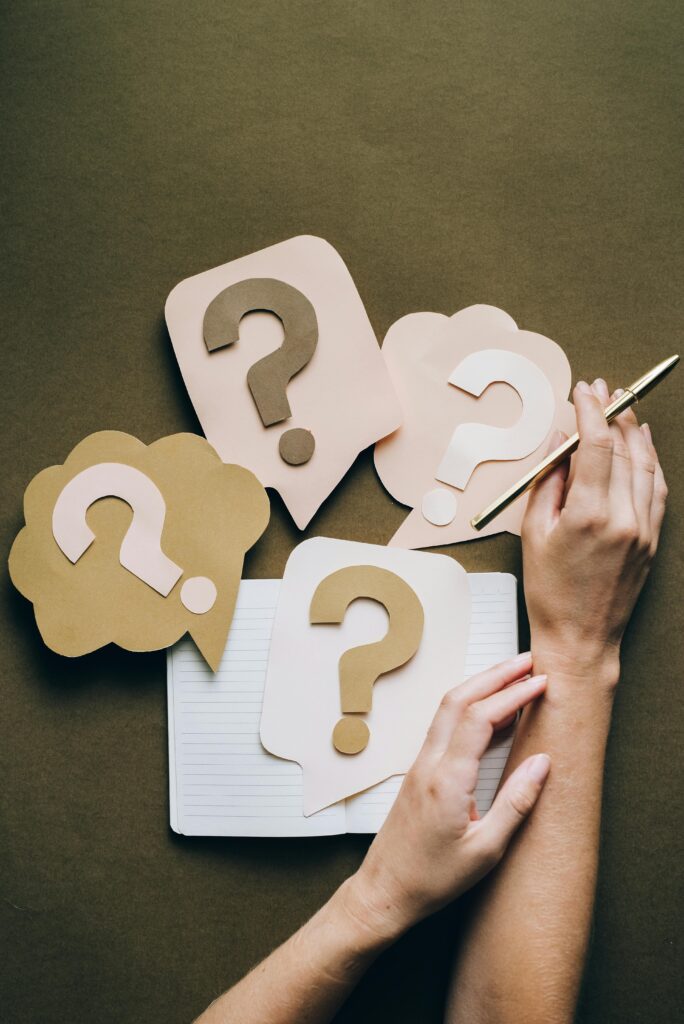
It starts with curiosity.
Curiosity shakes the brain up a little. It interrupts certainty long enough to create space for another possibility.
Curiosity asks:
- “Wait… is that actually true?”
- “What evidence do I really have?”
- “What am I making this mean right now?”
- “Could there be another explanation?”
- “What if this didn’t actually mean anything at all?”
And importantly, sometimes our stories are true. There is real intuition. There are legitimate patterns and valid gut feelings. I’m not suggesting we stop trusting ourselves altogether.
But certainty without curiosity is dangerous.
It’s what so often fuels social anxiety, insecurity, relationship conflict, family estrangement, and even political division. And if it can distort how we see the world around us, imagine what it can do internally when we start reacting to our own interpretations of ourselves.
Holding Our Stories More Loosely 💭
I think the goal is probably not to stop our brains from creating stories altogether. That’s simply part of being human.
Maybe the real work is learning to hold those stories a little more loosely. To pause before turning assumptions into facts. To hold our minds accountable and stay curious long enough for other possibilities to exist.
Because while sometimes the story we’re believing is true… sometimes it’s simply the loudest explanation our brain could find to make uncertainty feel safer.
And those are two very different things.
Let curiosity be your guide. Because if we aren’t careful, we can spend years reacting to realities that never actually existed in the first place. ✨
I’d love to hear if this resonates with you and whether you’ve had any luck staying curious in the middle of the story.